The Black Music Action Coalition (BMAC) has been busy in Georgia ahead of what is a pivotal election for the United States. In an effort to get people to the polls, the advocacy organization put empowerment messages on a custom BMAC “It’s Your Fight…VOTE” bus that is making stops across Georgia to pick up voters and take them to the polls while encouraging a voting plan and early voting.
BMAC has also hosted raw and meaningful conversations along the way, highlighting key issues plaguing the U.S.
In line with a mission to use the power of music to create systemic change, the BMAC “It’s Your Fight… VOTE” bus used the power of lyrics from music legends like James Brown, Queen Latifah, Kendrick Lamar, Public Enemy and Beyoncé, among others. The BMAC Voter bus also features a vintage poster with an image of Muhammad Ali along with the slogan: “It’s Your Fight, Vote.”
“BMAC is steadfast in our commitment to use the power of our voice to make positive, long lasting change,” BMAC CEO/President Willie “Prophet” Stiggers said. “We chose the words of Artists who have moved the needle through music to adorn our bus and the image of the great truth teller, Muhammad Ali, to be the face of our bus as it moves through Georgia, fueled by the power of voters…It’s Our Fight…VOTE.”
BMAC will join recording artist Omeretta on Election Day (November 5) as the BMAC bus continues to take people to the polls in the Zone 3 area of Atlanta.
Each initiative build on BMAC’s events that use the power of music to shine a light on the truth, as well as legislative efforts that work towards long-lasting policy change around social and racial justice. Recent efforts include the annual BMAC Gala ,which brought together music and activism to honor LL COOL J, USHER, BET, Live Nation and Ivy McGregor.
Beyoncé is urging her mother, Tina Knowles, to ease off when sharing family tales in an upcoming memoir that explores Tina’s life and her role as the matriarch of an iconic family.
The legendary entertainer addressed the announcement of “Matriarch,” Tina’s new book, applauding her 70-year-old mother while also playfully asking her to hold back some details.
“Mama, I couldn’t be prouder. My love for you goes beyond what I can say,” the “Crazy in Love” artist wrote. “You put your heart into this book. I’m happy for you to share some of the stories that shaped you into who you are. To know you is to love you.”
However, Beyoncé, who is known for maintaining a tight lid on her personal life, cheekily reminded Tina, “But please don’t spill too much Mama Tea.”
Tina’s memoir, due to be released on April 22, 2025, promises a deep dive into her experiences growing up in Galveston, Texas, her marriage to Mathew Knowles, and the journey of raising her daughters, Beyoncé and Solange, as well as caring for Kelly Rowland—considered another member of their extended family.
The text will also explore Tina’s professional accomplishments, including her work as a businesswoman, fashion designer, and philanthropist.
A summary shared by Penguin Random House describes the memoir as the story of Tina’s life and a multigenerational family saga rich with “the wisdom that women pass on to each other, mothers to daughters, across generations.”
The book, which is now available for pre-order, is expected to pull back the curtain on Tina’s personal and professional life while capturing the American experience through the lens of her upbringing and influence.
Warren G has provided an eye-opening glimpse into his ongoing attempts to get Def Jam to revert his rights to his masters back to him in his latest interview.
During a recent interview with Bootleg Kev, Warren G shared his frustrations with Def Jam and detailed a failed attempt to regain the rights to his master recordings before the 35-year reversion period mandated in U.S. copyright law.
The “Regulate” MC started off by recalling how he called on Snoop Dogg, and Def Jam co-founder Russell Simmons to work together to persuade the iconic label to relinquish his masters early. However, he claims their attempts to negotiate the reversion of his masters back to him barely made it past their inception before being shot down.
“I reached out to ’em, s##t me, Snoop [Snoop Dogg] and Russell [Russell Simmons] even tried to talk to the counsel and tried to make it happen,” Warren G said. “They was like, ‘no’. It’s like damn. That’s just like a slap in the face.”
The West Coast legend continued to explain why he felt that he felt Def Jam owed his masters based on what he contributed to the label with his success. Though Warren has five years left before the 35-year term is up, he feels Def Jam could choose to honor him now.
“And that’s even like today, I’m like, I would think that they would talk to UMG, Def Jam, and say, ‘look, this dude did a lot for us,'” he remarked. “He saved us. He got us out the red.”
He continued, “Let’s reward him back, honor him and give him his masters. Let’s not make him wait another four years. Let’s give it to ’em right now. Why juice me for the rest of the—y’all been juicing me for 30 years?”
Warren G says he has to wait 35 years to get his masters back from Def Jam & wants to recreate a new video game like 'Def Jam Vendetta' during his interview with Bootleg Kev pic.twitter.com/Ni2G1chX0t
The conversation soon shifted to the beloved Def Jam Vendetta video game series, which led to Warren G voicing his desire to bring it back as a lucrative means to supplement the income he’s losing as a result of not being in control of his masters.
“People come up to me all the time, ‘You was one of the hardest muthaf##kas in the game,’” he said, referring to his memorable character in the fighting game.
Warren expressed enthusiasm for investing in a new version of the game, explaining that it could feature modern rappers like Kendrick Lamar and Drake and be monetized with downloadable content.
“And the thing is, is just, okay, chop it up,” he said. “Just chop it up. Give everybody a piece. Like say if you use five, maybe eight guys, chop that s##t up.”
Warren G’s impact on Def Jam is undeniable, with his 1994 debut album, Regulate… G Funk Era, becoming an instant classic and debuted at No. 2 on the Billboard 200 Chart after selling 176,000 first-week units. The album, which features the Grammy-nominated hit “Regulate,” has been certified triple platinum by the RIAA and continues to be celebrated as a landmark in hip-hop.
Sacramento rapper X-Raided walked out of prison after 26 years, but he wouldn’t have done it without the unlikely guidance of Lyle and Erik Menendez.
The Menendez brothers, high-profile inmates convicted in the murder of their parents, became X-Raided’s mentors, who helped X-Raided navigate the labyrinth of politics, spirituality, and personal growth during his decades-long incarceration.
Sentenced at 17 for a gang-related murder in 1992, X-Raided—whose real name is Anerae Veshaughn Brown—seemed destined for a life behind bars.
His rap lyrics from his debut album Psycho Active were even used in court to bolster the prosecution’s case, something that would be prohibited under California’s current AB 2799 law.
Despite the grim circumstances, X-Raided’s time in prison turned into an odyssey of mentorship and redemption, thanks in large part to the Menendez brothers.
“Lyle showed me the unwritten rules of prison life, while Erik took my mind to a different level, spiritually,” X-Raided said. “They supported me, helped me develop as a man, and wrote to the parole board when I was up for release.”
Their backing proved crucial.
After serving over 26 years, X-Raided was granted parole and stepped back into a world he hadn’t seen since the early 1990s.
Now free, he’s resumed his music career, partnering with Strange Music and using his platform for community activism.
One of his key initiatives is the Augmented Forensic Youth Program (AFYP), directed at diverting at-risk youth from similar fates through mentorship and restorative justice programs.
X-Raided’s deep ties to the Menendez brothers persist as their potential resentencing looms.
Expressing his loyalty, X-Raided made it clear: “They’ve changed over the years, like I have. They deserve a second chance, just like I was given.”
Mariah the Scientist cussed out cynics who mocked her relationship with Young Thug at her Brooklyn concert on Thursday (October 31). Mariah interrupted her on-stage prayer to target anybody who thought Young Thug would never be released from jail.
“There was people telling me I would never see him again,” she told the crowd. “There was people who was laughing at me and laughing at the situation, making fun of us. Man, this s### so f###### crazy, man. This supposed to be a prayer. Uh, thank you God. Amen. Now back to you. All you m############ who doubted me and doubted this s### and said this n#### was never coming back: f### all y’all! Whatchu gon’ say now, b####?”
Mariah and Young Thug’s romance was often the subject of jokes during his incarceration. He was locked up for more than two years.
Young Thug accepted a plea deal in the YSL RICO trial, which began in 2023. He pleaded guilty to drug, gang and gun charges on Thursday.
Young Thug’s girlfriend, Mariah the Scientist, says a prayer and interrupts herself to cuss out all the doubters at her show tonight 💚 🙏 pic.twitter.com/0CDupRtOJX
Judge Paige Reese Whitaker sentenced Young Thug to 40 years, but he avoided prison. Five years were commuted to time served. Young Thug walked free with 15 years of strict probation. If he violates his probation, he faces a 20-year prison sentence.
Young Thug was ordered to stay away from the metro Atlanta area for the first 10 years of probation. The 33-year-old rapper can return for court-ordered presentations at schools or organizations serving children. He also received permission to visit Atlanta for funerals, weddings and other exceptions.
Judge Whitaker barred Young Thug from associating with his co-defendants, except for his brother Unfoonk and YSL collaborator Gunna. Young Thug must submit to random drug tests and cannot possess a gun while on probation.
Young Thug secured his plea deal a week after prosecutors made a mistake in the YSL RICO trial. Unredacted evidence led to calls for a mistrial, resulting in multiple defendants striking plea deals with prosecutors.
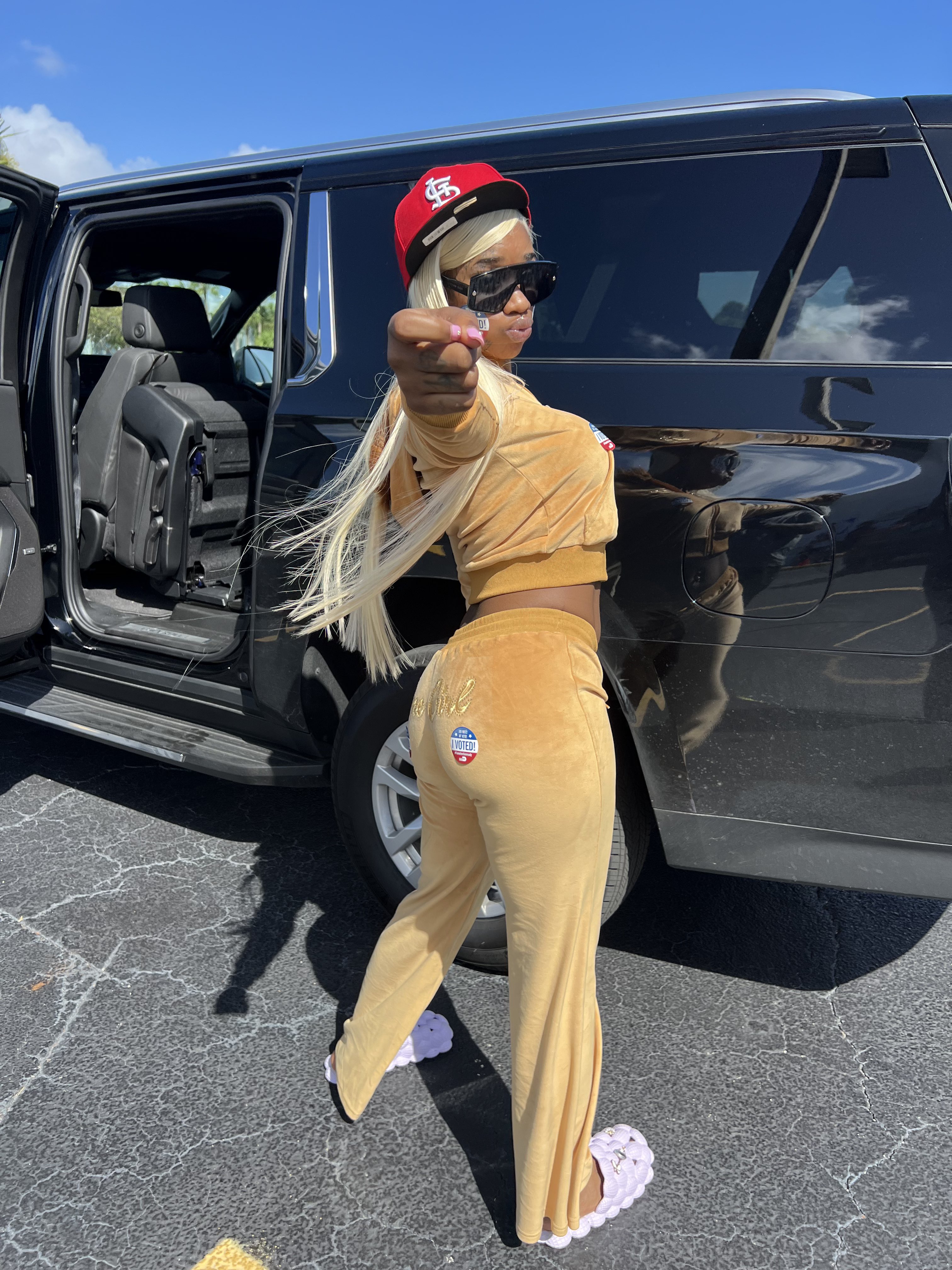
With Election Day around the corner and early voting coming to a close, it’s officially time to vote! And who better to set the example for the hood than the unapologetically sexy and red Sexyy Red? In a new tweet, she revealed she voted for and supports Kamala Harris for President. She said it’s “my body, my choice.”
Sexyy Red now joins the growing squad of pop culture powerhouses showing love for Kamala. This includes Beyoncé, Flo Milli, Megan Thee Stallion, and GloRilla. The Hood’s Hottest Presidential Candidate said, “Don’t tell us what to do with our coochies!” Well, there you go!
Get out there, vote, and remember—Sexyy said it best!
So, here is the rumor! The word on the street is that double-crossed Donald Trump. Some say she took the bag from The Donald but did not go all the way. Remember, she evoked Trump imagery and all that just a few short months ago when she said, “I like Trump, yeah they support him in the hood. At first, I don’t think people was f##kin’ with him like they thought he was racist, saying little s##k, and you know, against women. But once he started getting Black people out of jail and giving people their free money. Oh baby we love Trump, we need him back in office.”
But she has gone with the winning team or simply got educated on what is right!
Megan Thee Stallion made a heart-wrenching decision in 2019 to take her mother, Holly Thomas, off life support after a series of debilitating seizures left her unresponsive.
Thomas, at 47, had been battling a brain tumor, and according to Megan, doctors informed her that her mother’s condition would not improve.
Speaking in her latest documentary Megan Thee Stallion: In Her Words, the rapper recounted the long, difficult nights she spent at her mother’s bedside, hoping for a miracle before realizing it was time to let go.
“They had to put her under, and she was just brain dead,” Megan said in the film. “I stayed up there every day… just praying that she could shake back from it. But once I realized she wasn’t coming back, I knew I couldn’t keep her like this. I had to make the decision to pull the plug, and she passed the next day.”
Losing her mother deeply affected Megan, who was 24 at the time and had been rising in the world of Hip-Hop.
Holly Thomas was not only her mom but also her manager and guiding influence. Her death left the rapper feeling both lost and overwhelmed.
“When my mama passed away,” Megan remembered, “I think I really forgot who I was. I lost a lot of confidence because I was so used to my mama telling me what to do. And when life started getting crazy, I didn’t have her.”
Holly’s influence on Megan went beyond just professional advice.
In a 2021 interview, the Grammy-winning artist spoke about how both her mother and great-grandmother instilled lessons of strength and positivity that shaped her as an artist and individual.
“My mom and [late great-grandmother] filled me with self-love and determination,” Megan said. “Because of them, I never felt unworthy of my success or my womanhood. They taught me that other women don’t need to lose for me to win.”
With the election just days away, Vice President Kamala Harris and Donald Trump are ramping up their efforts to earn the public’s vote.
During Trump’s stop in Wisconsin on Friday (November 1), he caught everyone’s attention by simulating oral sex on the microphone. In a clip that’s now gone viral, Trump pretends to stroke the mic as he opens his mouth and moves his head up and down. Consequently, the hashtag “#TrumpIsGoingDown” is currently trending on Twitter (X).
Trump’s gesture seemed to be prompted by his frustrations over technical issues.
“You’ve got to be kidding,” he said at one point. “Do you want to see me knock the hell out of people backstage?” He then said it was a “pretty stupid situation” after rallygoers chanted “fix the mic” during his speech.
He later added, “I get so angry. I’m up here seething. I’m seething. I’m working my ass off with this stupid mic. I’m blowing out my left arm. Now I’m going to blow out my right arm and I’m blowing out my damn throat, too, because these stupid people.”
Don’t call them weird…. don’t call them garbage.. like, what in the hell are we supposed to call them? If they don’t want those designations, maybe try not participating in behaviors that warrant those titles.? 🤷🏽♀️#TrumpIsGoingDownpic.twitter.com/Qj1Rrwys7f
Trump continued lashing out, going on a rant about retired Marine Corps Gen. John Kelly, his former chief of staff, before fuming again over apparent microphone issues. Once he started complaining about the low height of microphone stands at his events, that’s when the oral sex simulation came in.
Only three days remain until Election Day 2024, and both Trump and Harris are hitting the American South, continuing to make their closing arguments to voters. Trump will hold two rallies in North Carolina, one in Gastonia and one in Greensboro, but in between will hold an event in Salem, Virginia.
John Legend’s longtime manager, Ty Stiklorius, recalled a disturbing encounter at one of Sean “Diddy” Combs’ parties in St. Barts, nearly three decades ago.
At the gathering, Stiklorius, now 49, shared in an opinion piece for The New York Times that she was led into a bedroom by an unidentified man, a moment she found deeply unsettling.
“To this day, I can’t remember how I managed to talk my way out of that terrifying situation,” she wrote, adding that her quick thinking—claiming her brother was “on this boat” and likely searching for her—may have saved her that night.
At the time, Stiklorius initially dismissed the experience as “just one guy behaving badly at a drunken party.”
However, as her career in the music business progressed, she began to recognize a recurring trend throughout the industry: a culture where sexual misconduct was not only present but, in her view, allowed to thrive.
Reflecting on a second encounter a few years later, she recalled receiving what she described as an “unsubtle invitation” to a senior executive’s hotel room, deepening her concerns about the pervasive issues in the entertainment world.
Since 2005, Stiklorius has managed John Legend, crediting the Grammy-winning artist with renewing her faith in the profession and offering her an opportunity to navigate the industry in a way that aligns with her values.
“It turns out that many artists, including John, want to be a part of a different model of business and culture,” she expressed in the op-ed.
These revelations come as troubling allegations swirl around Combs, who is currently being held in connection with charges of sex trafficking and racketeering.
NLE Choppa recently revealed how he pulled off a $60,000 gamble to get Lil Wayne to appear in his new short film The Wash.
On Monday (October 28), NLE Choppa and director Ben Marc hosted an intimate movie-night-themed premiere event and streamed the short film at the swanky Rooftop Cinema Club in downtown Los Angeles. Along with Marc and his family and close friends, Sukihana, TDE rapper Ray Vaughn and Kia Shine were in attendance for the screening.
Additionally, artists such as BIA, Lay Banks, Skilla Baby and former model Amber Rose also made appearances at the event. Following the early preview of the flick, NLE Choppa shared the incredible lengths he went to in order to secure a cameo from Lil Wayne.
NLE Choppa revealed that while filming the video for his aforementioned hit featuring 41 and Kyle Richh in New York, he made the decision to halt all of his plans to accommodate Wayne’s schedule once the Carter 3 rapper agreed to join the cast of the short film — despite the fact he and Marc were in the early planning stages.
“I came to a realization that we needed an extra piece to the movie, and I hit Wayne out of nowhere,” NLE Choppa recounted to the audience. “I’m like, ‘me and Wayne have a great relationship,’ to the point, y’all have relationships with people, y’all don’t want to ask them for nothing. You feel me? Because y’all honor the relationship so much. So I just went about it, I was like, let me just see.”
He continued, “Me and Wayne have music. He’s a great mentor. He check up on me, we have a great relationship. I hit him. I’m like, ‘man, would you love to be in a short film I’m working on?’ And the man said, yes.”
To his surprise, Lil Wayne agreed, which NLE Choppa says was a surreal moment.
“And if y’all know Lil Wayne, Wayne is, he’s a tough f###ing cookie,” he said. “So when he said yes, I’m still like, ‘It ain’t no way this n###a just said yes.’ It is just like, the way that he is, the way he operates. It’s very inhuman. So it’s like I capitalized on it. I took a risk.”
However, the commitment to capturing Wayne’s cameo required a swift pivot in the filming schedule, along with what ended up being close to $60,000 in travel fees to bring everything together.
“I canceled all plans, caught a [private jet] from New York to L.A.,” he said. “It was, what, damn near, eight passenger plane—spent damn near close to 60 bands to get back to L.A.”
Marc echoed the intensity of the moment, saying he was set to shoot the film in Miami but dropped everything to fly to Los Angeles.
“Bro, Wayne said yes, I said, s##t,” Ben Marc added, underscoring the quick decision-making required to seize the opportunity.
Their efforts almost went up in smoke, though. Just as they landed in L.A., they got word from Lil Wayne’s team that he might not be able to make it that day. Despite the setback, NLE Choppa held firm to his faith.
“God sees our efforts,” he said, sharing how he relied on his belief to push forward. “Even when through adversity… it just wasn’t meant to be, God kept me in it and told me, keep going and stay faithful through it.” He encouraged fans to stay persistent in their own pursuits, reflecting on how this journey tested him but ultimately paid off.
NLE Choppa and Lil Wayne’s connection goes beyond The Wash; they’ve collaborated on several tracks. Their first major release was on “Ain’t Gonna Answer,” where Wayne’s signature style complemented Choppa’s high-energy verses. Following that, they worked together on a remix of Choppa’s#### “Do It Again,” strengthening their musical alliance and offering fans powerful collaborations across both the hip-hop and film worlds.
In addition to detailing the hectic filming schedule that nearly went south, NLE Choppa also spoke to AllHipHop about the bond he and Marc share, how they became inspired to rework Dr. Dre and Snoop Dogg’s cult classic 2001 film, and their favorite Lil Wayne style eras to emulate for Halloween costumes.
Sean “Diddy” Combs is facing accusations that he imposed strict weight and appearance standards on female guests during his infamous “Freak Off” parties, according to a former event planner who claims to have worked for the Hip-Hop mogul in the mid-2000s.
The unnamed planner described the behind-the-scenes process, which reportedly required women attending the parties to weigh no more than 140 pounds.
“We would do weigh-ins if we had to,” the event coordinator told The New York Post, explaining the weight threshold was enforced unless the women were “really tall,” in which case there was “some discretion.”
But, according to the planner, the requirements extended far beyond the scale.
The partygoers also had to meet a set of rigid physical criteria.
“No cellulite, no flab,” the planner said. Tattoos, piercings, and short hairstyles were also reportedly discouraged at the events, which took place in 2004 and 2005.
The dress code for the women attending Combs’ parties was equally specific, according to the planner’s recollections.
Women had to wear “very short” party dresses, no longer than mid-thigh, and “no pants, no jeans.”
Flat shoes were apparently banned, with high stilettos being deemed mandatory.
Beyond the aesthetic guidelines, women had to be “young and hot,” per the planner.
“They were very specific on who got in. No cheap clothes, no flat shoes. And every girl had to fit in a certain stereotype of appeal.”
Combs, now 54, is currently incarcerated at a Brooklyn detention facility while facing multiple charges, including racketeering conspiracy and sex trafficking, which have raised further public scrutiny around his past behaviors and the atmosphere surrounding his well-documented, high-profile parties.
Beyoncé was thrust into controversy last week after attending a campaign event for Kamala Harris in Houston, where her presence sparked a backlash from former President Donald Trump.
During one of his rallies in Wisconsin, Trump claimed that the crowd had booed Beyoncé after she failed to perform, mocking the singer and the Democratic Party.
“They got Beyoncé,” Trump stated at the event. “They said ‘Beyoncé’s coming to sing.’ But she didn’t sing, and people booed the hell out of her and Kamala.”
However, those close to the pop star, including her father, Mathew Knowles, quickly disputed Trump’s characterization.
In response to the claims, Mathew issued a stern rebuttal, insisting that no such boos occurred.
“I can unequivocally say no one was booing,” Mathew said in a statement to media outlets. “That’s just a lie. Everyone has the right to their own opinion, but they don’t get to lie.”
At the Houston event, Beyoncé didn’t perform any of her songs.
Instead, she delivered a heartfelt speech aimed at empowering women and advocating for a better future.
“I’m not here as a celebrity, I’m not here as a politician. I’m here as a mother,” she stated in a moment of reflection.
With her words, the Grammy-winning singer focused on the need for unity and emphasized the importance of securing rights, especially concerning women’s independence and bodily autonomy.
As accusations and rebuttals continue to swirl, the divide between political figures and the entertainment world takes on new dimensions.
For Beyoncé, her message was clear: this wasn’t about fame or politics but about safeguarding the future for her children and others.
“A world where we have the freedom to control our bodies, a world where we’re not divided,” she said, highlighting the issues she sees as paramount for the next generation.
Orlando’s bustling Halloween festivities took a tragic turn this year as a deadly mass shooting erupted in the city’s downtown area, killing two and wounding several others.
According to a report from Orlando.com, two individuals were killed and multiple others were injured as a result of a mass shooting incident in the downtown area of the city, where Halloween celebrations were underway. The chaos prompted Mayor Buddy Dyer to declare a state of emergency and announce a strict curfew for the downtown entertainment district, aimed at reining in the violence.
“I’ll be issuing a local state of emergency for establishments within the downtown entertainment area that will end alcohol sales at midnight and implement a curfew from 1 a.m. to 5 a.m.,” Dyer stated at a press conference, visibly shaken. “We don’t make this decision lightly, and we have pursued a number of measures before reaching this point following another tragic shooting downtown.” The mayor confirmed the curfew will remain in place until next Friday (November 8) as a response to the recent events.
Orlando Police Chief Eric Smith detailed the rapid arrest of 17-year-old Jaylen Edgar, who now faces two counts of first-degree murder and six counts of attempted murder. Describing the scene, Smith recounted how officers were able to swiftly apprehend Edgar as he attempted to flee. “We used the cameras, of course, to see that, play it back. We had that capability at major intersections,” he explained. “The officers responded very quickly, the officers did a great job. They responded right when they heard the shooting. You know, everybody else is running…They found the shooter. They took him down.”
In the chaos, a total of seven were wounded, with one additional person trampled in the frenzy to escape the gunfire. Another female victim, who drove herself to a hospital, was later reported in stable condition.
50 Cent has opened up about the factors that have caused a rift between him and the current STARZ CEO, and believe it or not, Diddy has something to do with it.
In a no-holds-barred interview with Hot97, rap mogul and entertainment powerhouse 50 Cent revealed a strained relationship with STARZ CEO Jeffrey Hirsch, largely fueled by Hirsch’s connections with disgraced Bad Boy executive Sean “Diddy” Combs. 50 Cent’s projects on STARZ, especially his hit show Power, have been among the network’s biggest successes.
However, he said his dominance on the platform led to internal concerns. The tension escalated when Hirsch allegedly tried to launch other shows to compete with 50 Cent’s projects. In particular, he pointed out that not only is the new series Fat Joe Talks akin to an initiative he had plans for, he alleged that Diddy had something to do with it, as well.
“And they [STARZ] even struggled in other areas — they was trying to create another version of what’s going on there by Joe [Fat Joe] show,” 50 Cent said, referring to his formal rival’s new talk show. “I would’ve did that too in a different way because it’s obviously growing. Right. But that was a Puffy production.”
According to Fifty, Hirsch’s involvement with Diddy dates back to when he helped the mogul set up a major deal for Revolt media—a collaboration that 50 believes has affected Hirsch’s perspective on their business dealings. In 50’s words, Hirsch’s history with Diddy is central to the problem. He shared that Hirsch had a subordinate role in helping establish Diddy’s Revolt network.
“Puff views him as a worker bee,” 50 noted, “He helped with the Revolt deal. He put the Revolt deal together for Puff.”
However, according to 50 Cent, Diddy had no need for Hirsch after that, which left the executive free to climb the corporate ladder—eventually leading him to the CEO role at STARZ. But the G-Unit mastermind says he isn’t at all impressed by his new post, which is another added layer to the issues between them.
“Now the guy’s the CEO and you think you over me? No, they’re not over me. I don’t give a f##k what your job title is,” he added, making it clear that his clout and brand power still outrank Hirsch’s corporate title in his eyes.
Hirsch and Diddy’s collaboration on Revolt is part of a larger chapter in Diddy’s business history, though Diddy recently stepped down from involvement with the network following mounting legal issues. Amidst allegations of sexual assault and an ongoing federal investigation into sex trafficking, Diddy’s exit from Revolt has marked a significant shift, potentially impacting the media landscape Hirsch once helped him build.
Sean “Diddy” Combs is trying to keep his legal mess under tight wraps, but his family and lawyer might have ruined his plans.
Cassie’s lawyer, Douglas H. Wigdor, called out Diddy’s attempt to silence witnesses and other lawyers with a gag order, slamming it as pure hypocrisy.
According to Wigdor, while the disgraced mogul’s family and legal team are out here speaking their minds, Diddy’s trying to block others from doing the same.
Wigdor filed a letter with the court today (November 1) and called out Diddy’s family.
He pointed out how Diddy’s son Quincy recently took to Instagram, calling the accusations “devastating” for the family and promising that the “truth will prevail.”
Diddy’s mom, through her own lawyer, also went public, saying the charges were part of a “public lynching” and a “narrative created out of lies.”
Wigdor says these statements show Diddy’s attempt to muzzle everyone else is beyond ironic.
If Diddy’s family can tell their side of the story, Wigdor argued, then Cassie and other accusers deserve the same right.
“It is not clear exactly whom Mr. Combs seeks to silence with his requested relief, but his submission suggests that anyone who has claimed to have been a victim of Mr. Combs—regardless of whether their experience is relevant or connected to the criminal case at hand—must be prevented from speaking out about their allegations,” Wigdor said.
He claimed Diddy’s team wants to keep a lid on any damaging statements while his own family gets free rein to speak out.
Wigdor didn’t stop there and called out Diddy’s lead attorney, Mark Agnifilo, who’s publicly described the case as a “racially motivated prosecution.”
Agnifilo made weird statements about Diddy’s infamous stash of baby oil and even appeared in a documentary about the case, a move Wigdor said is fueling the media fire.
Wigdor’s court filing painted a picture of a high-stakes game where Diddy’s family and legal team set the rules, but only for themselves.
He argued that the alleged victims and their attorneys should get the same chance if Diddy’s side can speak.
“Mr. Combs and his agents’ abuse of extrajudicial statements alone undermines the legitimacy of the relief he now requests and is yet another basis for denying his request for a gag order,” Wigdor said.
I ruminate over my ancestors a lot. I wonder. What did they think about as they fought through the thick, oppressive, and toxically racist environment through the eras here? Do you think about your kids, grandkids or others’ kids? Do you ponder about the future and how those people that do not exist yet will look at us? I obsess over the future. Selfishly, I want to be a jewel in my family history and, more broadly, I want people to look back on the work we put in with reverence. I think about the affection I have for Harriet Tubman, Martin Luther King, Jr., Medgar Evers, Malcolm X (el–Hajj Malik el–Shabazz), John Lewis, Earl Graves, Fannie Lou Hamer and so many more. I love them, and I am eternally grateful for their strides, courage and supreme sacrifices.
Every step of the way, right here in America, we have been met with resistance, hostility and debilitating racism. But what are we willing to give up to stop further oppression? For now, do not worry about that. Just ponder how the president could impact your life. Then consider how Donald Trump – who we know by now – could be shaping your life, children’s lives, the unborn’s existence, and those that have not even been conceived. No matter how you see yourself – crown jewel or clown – or your family forty years from now, the choices made in this election will reverberate for generations.
Here’s a list of 100 reasons why individuals who are poor, middle class, working class, upper middle, slightly rich, African American, LGBTQ+, women, or just plain ol’ human might consider not voting for Donald J. Trump for president:
Cuts to Social Programs: Trump’s policies have included proposals to cut funding to social safety net programs like Medicaid and food assistance, which disproportionately affect low-income families.
Healthcare Access: Repeated efforts to repeal the Affordable Care Act (ACA) could leave millions of Americans without health coverage, disproportionately affecting low-income, minority, and female populations.
Tax Cuts Favoring the Wealthy: His tax reform primarily benefited corporations and the wealthiest Americans, providing less relief to working-class and middle-class families.
Minimum Wage Opposition: Trump has historically opposed raising the federal minimum wage, keeping it at a level that is not a living wage for many.
Affordable Housing: Trump’s administration has rolled back regulations designed to promote affordable housing access.
Environmental Justice: The rollback of environmental protections has disproportionately harmed low-income communities and communities of color that are more likely to live near industrial pollution.
Education Cuts (Including The Whole Department of Education): The Trump administration proposed cuts to public school funding while promoting private school vouchers, which could undermine public education systems.
Women’s Rights: His administration has taken steps to restrict reproductive rights, including attempting to defund Planned Parenthood and imposing restrictions on abortion access.
Police Brutality: Trump’s response to the Black Lives Matter movement, including calls for “law and order,” has been seen as encouraging police violence and ignoring systemic racism in policing.
Lack of Focus on Equal Pay: During his presidency, there was little to no action taken to address the wage gap between men and women, especially affecting women of color.
Civil Rights Rollbacks: His administration attempted to roll back key civil rights protections in areas such as housing and education.
COVID-19 Response: His administration’s handling of the COVID-19 pandemic disproportionately impacted low-income and minority communities, both in terms of health outcomes and economic fallout. He wants RFK to lead these public health agencies’s efforts.
Voter Suppression: His rhetoric and actions have supported efforts to suppress voting rights, particularly for African Americans and other marginalized communities.
Lack of Support for Unions: Trump’s administration weakened labor unions, which historically have been a key source of support for working-class people.
Climate Change Denial: His dismissal of climate change disproportionately affects poorer and minority communities, which are more vulnerable to climate-related disasters.
Attacks on the Affordable Care Act: Efforts to dismantle the ACA could result in millions losing health insurance, including low-income and minority populations.
Privatization of Prisons: His administration supported the expansion of private prisons, which disproportionately incarcerate African Americans and Latinos.
Housing Discrimination: Trump’s administration weakened enforcement of the Fair Housing Act, making it harder for minorities to challenge discriminatory practices.
Weakened Worker Protections: Trump’s policies rolled back worker safety regulations, which disproportionately affect low-wage and essential workers.
Racially Divisive Rhetoric: His rhetoric on race often stoked division and racial tensions, which undermined social cohesion and equality.
Undermining Women’s Healthcare: The administration weakened the ACA’s contraception mandate, making it harder for women to access affordable birth control.
Inequality in Tax Relief: Trump’s tax cuts for the wealthy widened income inequality, leaving lower- and middle-income Americans with relatively little benefit.
Rolling Back Financial Protections: He rolled back regulations on payday lenders, which prey on low-income individuals.
Ineffective Criminal Justice Reform: Despite some bipartisan reforms, Trump’s criminal justice policies largely failed to address systemic issues that disproportionately affect African Americans.
Attacks on DACA: His efforts to end the Deferred Action for Childhood Arrivals (DACA) program placed young immigrants, often from poor or working-class backgrounds, in jeopardy.
Refusal to Address Gun Violence: Trump refused to seriously address gun control, which disproportionately affects low-income and minority communities.
Dismantling Workplace Safety Regulations: The rollback of workplace safety standards particularly affects low-income workers in dangerous industries.
Attacks on LGBTQ+ Rights: The Trump administration rolled back protections for LGBTQ+ individuals, particularly transgender people, in healthcare and employment.
Poor Economic Recovery for Minorities: Economic gains under Trump disproportionately benefited white Americans, leaving many African Americans and Latinos behind.
Cuts to Mental Health Programs: Mental health services, especially important for low-income families, faced budget cuts under his administration.
Lack of Affordable Childcare Solutions: Trump did not advance policies to make childcare more affordable, which particularly impacts working women.
Unemployment Insurance Cuts: His administration supported cuts to unemployment insurance, reducing benefits that help low-income and working-class individuals.
Mishandling of Racial Violence: His handling of racially motivated violence, including the Charlottesville incident, was widely criticized as insufficient and inflammatory.
Disregard for Indigenous Rights: Trump’s policies disregarded the sovereignty and rights of Native American communities, including environmental protections on their lands.
Work Requirements for Welfare: He supported imposing work requirements on welfare recipients, which disproportionately harms single mothers and low-income families.
Food Stamp Cuts: Trump sought cuts to the Supplemental Nutrition Assistance Program (SNAP), which would have taken food assistance away from millions of low-income Americans.
Hostility Toward Refugees: His administration severely limited refugee resettlement, affecting people from war-torn or impoverished countries.
Inequitable Distribution of Tax Breaks: Tax breaks provided under Trump’s policies were skewed toward the wealthiest Americans, widening the wealth gap.
Dismissal of Gender Equality: Trump frequently made dismissive remarks about gender equality, contributing to a culture of sexism and undermining women’s progress.
Lack of Action on Paycheck Fairness: His administration did not advance legislation to close the gender pay gap, which disproportionately affects women of color.
Opposition to Paid Family Leave: Trump did not prioritize policies that would expand paid family leave for working parents.
Failure to Address Student Debt: The administration did little to relieve the growing student debt burden, which disproportionately affects low-income and minority students.
Ignoring Domestic Violence Crisis: There was little focus on addressing domestic violence, an issue that disproportionately affects women.
Trade War with China: The trade war hurt farmers, many of whom are part of the working class and saw reduced income from lost markets.
Economic Recession Impact: His handling of the economy, particularly during COVID-19, resulted in a recession that hit the poorest Americans hardest.
Anti-Union Policies: Trump’s NLRB appointments weakened union power, reducing workplace protections for many.
Attacks on Disability Rights: His administration sought to cut funding to disability programs, which help low-income and working-class families.
Rhetoric Against Immigrants: His inflammatory rhetoric against immigrants stoked division and fear, disproportionately affecting communities of color.
Wants To Cut Social Security: Trump did not push for meaningful increases in Social Security benefits, and wants to cut aid to elderly and low-income people.
Banning Black History And Teaching About Slavery: His opposition to teaching Black History and so-called critical race theory limits efforts to address systemic racism and improve race relations.
Opposition to Rent Control: Trump’s administration did not support rent control measures, which could help low-income renters in cities with high housing costs.
Corporate Deregulation: Deregulation of corporations, including in industries like coal and oil, often prioritized profits over worker safety and environmental health, harming poor communities.
Unaddressed Food Insecurity: The administration did little to address growing food insecurity among low-income families, especially during the pandemic.
Lack of Affordable Healthcare Initiatives: No major initiatives were introduced to reduce healthcare costs, which disproportionately hurt low-income individuals.
Disregard for Mental Health Crisis: Trump did not significantly address the growing mental health crisis, which affects low-income and minority communities.
Weak Support for Infrastructure: Infrastructure proposals under Trump did not prioritize funding for public transportation, which many poor and working-class individuals rely on.
Encouragement of White Nationalism: His rhetoric and reluctance to denounce white nationalist groups emboldened racist movements, harming communities of color.
Rejection of Affirmative Action: Trump’s administration worked against affirmative action policies that seek to create equal opportunities for minorities and women.
Cuts to Legal Aid Programs: Reduced funding for legal aid left low-income individuals with fewer resources to navigate the justice system.
No Action on Predatory Lending: His administration allowed predatory lending practices to continue, disproportionately affecting low-income families.
Failure to Reform Drug Laws: Despite bipartisan support for reform, Trump did not take meaningful steps to address drug laws that disproportionately affect communities of color.
Opposition to Climate Action: The administration’s opposition to climate action disproportionately affected low-income and minority communities facing environmental hazards.
Elimination of Pandemic Office: By eliminating the global health security office, Trump weakened the country’s preparedness for pandemics, which hit low-income and minority communities hardest.
Refusal to Extend the Voting Rights Act: Trump did not support renewing or strengthening the Voting Rights Act, which is critical to ensuring African Americans and other minorities can vote freely.
Failure to Address Homelessness: Trump did not advance meaningful policies to reduce homelessness, which disproportionately affects African Americans and veterans.
Hostility Toward Public Transit: His policies did not prioritize improving public transit systems, which are essential for low-income, working-class, and urban populations.
Rejection of Police Reform: Trump opposed key elements of police reform that would address systemic racism and reduce violence against African Americans.
Opposition to Voting by Mail: Trump’s opposition to expanding voting by mail during the COVID-19 pandemic made it harder for many poor and working-class individuals to vote safely.
Lack of Job Training Programs: The administration did not advance significant programs for job retraining and skills development, which could have helped workers displaced by automation and trade policies.
Tax Breaks for Real Estate Developers: Policies such as the Opportunity Zones primarily benefited wealthy developers rather than low-income communities.
Gender-Based Violence: Trump’s administration did not prioritize action on gender-based violence, affecting many women, especially in low-income communities.
Unaddressed Wage Stagnation: The Trump administration did not address wage stagnation, which disproportionately affects working-class and middle-class Americans.
Racial Gerrymandering Support: The administration supported redistricting efforts that disenfranchised minority voters.
Inaction on Corporate Welfare: Trump’s tax cuts provided subsidies to large corporations while offering little to low-income workers.
Weakened Consumer Protections: Rolling back consumer protections harmed poor and working-class individuals who are more vulnerable to financial exploitation.
Attacks on Diversity Programs: Trump’s administration worked to dismantle diversity programs in government and corporate sectors, affecting opportunities for minorities and women.
No Paid Sick Leave Expansion: The administration did not advance paid sick leave policies, which disproportionately harm low-income workers who cannot afford to take time off.
Erosion of Public Health Services: Cuts to public health services disproportionately impacted low-income and minority communities that rely on them.
Weakened Voting Rights Protections: Trump’s support for restrictive voting laws disproportionately affected African Americans and other marginalized groups.
No Action on Childcare Costs: His administration did not take meaningful action to reduce the rising costs of childcare, which impacts working families, particularly women.
Failure to Address College Affordability: Trump did not push policies to make college more affordable for low-income students, worsening student debt.
Attacks on Affirmative Housing Measures: Trump rolled back policies intended to combat housing segregation, making it harder for African Americans to access fair housing.
Rescinding Clean Water Protections: The rollback of clean water protections disproportionately harms communities that already struggle with clean water access.
Dismissal of Black Female Leadership: Trump frequently disrespected and dismissed Black women in leadership positions, undermining their credibility and contributions.
Denial of Systemic Racism: Trump’s refusal to acknowledge systemic racism prevents addressing inequalities that affect African Americans and other communities of color.
Weak Enforcement of Fair Pay Laws: His administration did little to enforce laws designed to ensure women receive equal pay for equal work.
Cuts to School Nutrition Programs: Proposed cuts to school nutrition programs would have disproportionately impacted low-income children who rely on free or reduced-price meals.
Weak LGBTQ+ Protections: Trump’s policies rolled back protections for LGBTQ+ individuals, affecting their employment, healthcare, and civil rights.
Neglect of Historically Black Colleges and Universities (HBCUs): While Trump claimed to support HBCUs, many felt his administration did not provide significant or meaningful increases in funding.
Weakened Emergency Response Programs: Cuts to emergency response programs under Trump left poor communities vulnerable to disasters.
Anti-Worker Policies: Trump’s administration supported “right-to-work” laws, which undermine unions and reduce wages and benefits for workers.
Weak Gun Control Legislation: His inaction on gun control disproportionately affects minority and low-income communities that suffer higher rates of gun violence.
Failure to Tackle Hunger: Trump’s administration did not take significant steps to address rising food insecurity, which disproportionately affects African American and Latino communities.
Undermining of Obamacare Protections: By trying to dismantle the ACA, Trump’s policies threatened protections for people with pre-existing conditions.
Lack of Investment in Public Schools: His administration’s focus on charter schools and private vouchers detracted from much-needed investment in public education.
DJ Envy creeped out fans in the wrong way on Halloween. The Breakfast Club co-host recreated Lil Kim’s “Crush on You” video by putting his daughter in a scantily clad costume, eliciting outrage on social media.
Fans were shocked DJ Envy thought it was fine for his daughter to wear the revealing outfit. The veteran DJ faced an onslaught of criticism on social media.
“You are really f###### weird for this….like at any point during the setup did u say to yourself ‘nah this ain’t it????’” One user wrote on X (formerly known as Twitter).
Numerous users urged DJ Envy and other parents to stick to age-appropriate costumes for their children.
“Yikes Envy! this is not it,” another user wrote. “Your wife could’ve dressed up like Lil Kim and kept the kids out of it. The lyrics are inappropriate. Everything about the video is cringe. Just a terrible idea. Parents please do better and let the little girls dress like a princess or the little mermaid.”
Other observers had much harsher opinions of DJ Envy’s ill-conceived idea.
“This is pedophilia conditioning,” an X user wrote. “Sadly it’s going to get worse with these sickos.”
Young Thug’s father, Jeffrey Williams Sr., has expressed an array of emotions following his son’s release from Cobb County Corrections after his two-and-a-half-year legal battle in the landmark YSL RICO case.
On Thursday (October 31), just a few hours after Young Thug was sentenced to 15 years probation as part of a non-negotiated plea deal, Williams Sr. addressed the press, expressing both relief and frustration with the terms of the sentence. Young Thug (real name Jeffery Lamar Williams) pleaded guilty to various charges as part of the arrangement, in turn receiving a lengthy probation sentence, which notably includes a ban from residing in the Atlanta Metro area.
When asked how Williams Sr. feels now that his son is free, he delivered a complex response, both celebrating his son’s return but openly criticizing the restrictive conditions.
“I feel great that he’s going home,” Williams Sr. stated. “But at the same token, I still wanted to fight. But that’s his decision. On the other hand, I raised him to be the man that he is. I’ve always been in his life from a pup to now, and I’m going to continue to be in his life and as an adult.”
Williams Sr. explained how he feels the terms of Thug’s probation were particularly “offensive,” especially when it comes to the restriction on his son’s return to Atlanta.
“I’m totally against that because this is where he’s from,” he said, highlighting his dismay that someone without ties to the city could bar his son from his hometown. “And to have a district attorney take that away from him that isn’t a residence from here, she’s from another state, and to see her take a man away from where he’s from, to have to go live somewhere else, that’s offensive to me.”
Williams Sr. also used the moment to voice support for Courtney Kramer, a candidate for District Attorney, citing her as the ideal person to address what he sees as a problematic justice system in Fulton County. Previously, Kramer announced her plans to dismiss the YSL RICO case and charges against Yung Thug should she win her bid for the D.A.’s office.
“The work that we need to do foremost for the city of Atlanta, Fulton County, we need to get rid of the poison that’s in our system,” he said. “And that’s the district attorney office. So vote Courtney Kramer. I support Courtney Kramer to the fullest. I feel like she’s the best person for the job and it’s not because of what she said about us, it’s because she said that and she was in my company and never knew who I was.”
Despite his disapproval of the conditions, Williams Sr. conveyed his enthusiasm for his son’s artistic future and their shared passion for music.
“We’re going to get back to work,” he said. “We’re YSL, YSL loaded.” He affirmed that, even in the face of legal battles, he and his son remain committed to representing their brand, YSL, a loyalty that endures despite court arguments suggesting that YSL functioned as a gang.
Under the conditions of Young Thug’s supervised release, he will serve a 15-year probation term that restricts him from residing in Atlanta, though he may visit the area with prior approval from his probation officer. He’s allowed to continue recording music and performing, albeit under closely monitored circumstances, ensuring that he stays compliant with the terms as he navigates his return to the public eye and music industry. He will also be allowed to continue making music with Gunna, who previously accepted an Alford plea deal during the early stages of the YSL RICO case.
Judge James Moody Jr. sentenced Bankroll Freddie to 12 and a half years in prison on Friday (November 1). The rapper will spend more than a decade behind bars for federal drug and gun charges in Arkansas.
Bankroll Freddie was found guilty of marijuana possession and distribution, possession and distribution of a controlled substance, firearm possession in furtherance of drug trafficking and using a communications facility in the furtherance of drug trafficking crimes in April. The charges stemmed from a federal drug bust.
Judge Moody sentenced Bankroll Freddie to more than seven years for the firearm charge. The rest of the charges amounted to five additional years in prison.
Bankroll Freddie received five years each for the possession and distribution charges. The judge ordered the sentences to be served concurrently with a four-year sentence for the communications facility charge.
The feds arrested Bankroll Freddie, whose real name is Freddie Gladney, and other members of EBK a.k.a. the Every Body Killas gang in 2022. Multiple EBK members faced charges from two FBI operations designed to crack down on violence and drug trafficking in the corridor between Pine Bluff and Little Rock. The rival gang Loady Murder Mobb was also targeted in the investigation.
A judge sentenced Young Dolph’s killer Justin Johnson to an additional 35 years in prison on Friday (November 1). Johnson received 35 years for conspiracy to commit first-degree murder and 15 years for being a convicted felon in possession of a handgun. Judge Jennifer Mitchell ordered the sentences to be served concurrently.
Johnson was found guilty of first-degree murder in September. He was one of the two gunmen who shot and killed Young Dolph at a Memphis bakery in 2021.
Judge Mitchell previously sentenced Johnson to life in prison for the murder charge. Johnson requested a new trial in a motion filed on October 25.
“The verdict regarding the offenses of conviction was contrary to the weight and sufficiency of the evidence, and the evidence was insufficient to lead any rational trier of fact to conclude that Mr. Johnson was guilty beyond a reasonable doubt,” Johnson’s lawyer Luke Evans wrote. “The trial court erred by admitting gruesome photographs of the victim’s body at the crime scene. The trial erred by admitting gruesome autopsy photographs. The trial court erred by denying Johnson’s repeated motions to allow him to sit at the counsel table. The cumulative effect of multiple errors at trial warrants granting Mr. Johnson a new trial.”
Young Dolph’s fiancée Mia Jaye criticized Johnson’s bid for a new trial.
“It’s infuriating to see the person who took our loved one’s life now seeking a new trial over ‘insufficient evidence,” she said. “Their arrogance feels like a cruel joke to me and my loved ones. We won’t let this deter us; we will keep fighting for justice and honor the memory of [Young Dolph].”
Cornelius Smith, the other gunman, admitted to his role in Young Dolph’s murder when he testified against Johnson. Smith’s next court date is scheduled for November 15.
Hernandez Govan, the man who allegedly orchestrated Young Dolph’s murder, was given a November 22 deadline to accept a plea deal. Govan’s trial is scheduled to start in March 2025.